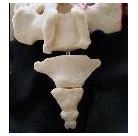
In 2008, Patrick Foye, M.D., proposed seated MRI as a new diagnostic test for appropriately selected patients with coccydynia (coccyx pain, tailbone pain).
Publication: Foye PM. A New Diagnostic Test for Coccyx Pain (Tailbone Pain): Seated MRI. American Journal of Physical Medicine and Rehabilitation. 2008 Mar;87(3): S36.
Author: Patrick M. Foye, M.D., Director, Coccyx Pain Center, New Jersey Medical School, 90 Bergen St., DOC-3100, Newark, NJ 07103-2499. Phone: (973)972-2802. Fax: (973)972-2825. www.TailboneDoctor.com
Abstract
BACKGROUND: Diagnostic workup of coccyx pain (tailbone pain, coccydynia) traditionally includes imaging studies such as x-rays, computerized tomography scans, magnetic resonance imaging (MRI), and bone scans. Since coccydynia is often most painful while sitting, a particularly useful technique is to perform lateral radiographs of the coccyx in the seated (weight-bearing) position. These “stress” radiographs may document substantial coccygeal dislocations. However, workup of coccydynia often requires imaging of intrapelvic organs to assess for malignancies and other intrapelvic pathology that may cause referred pain to the coccyx. Meanwhile, increasingly available “positional” or “dynamic” MRI allows MRI to be performed in positions other than traditional supine posture. Thus, the author innovated a new diagnostic test for patients with coccydynia: seated MRI of the pelvis and coccyx. Similar to seated radiographs, seated MRI can document “dynamic instability” of the coccyx, but with the additional advantages of soft tissue imaging of the intrapelvic organs, higher-quality details of coccygeal appearance, and the lack of radiation exposure. This technique has never before been published within the medical literature.
CASE PRESENTATION: The author presents a case of a 37-year old male with coccyx pain after mild trauma. Lumbosacral and pelvic x-rays had been normal. Upon physiatric [rehabilitation physician] pain management consultation after more than one year of persistent coccydynia, we ordered pelvic MRI (to assess for underlying intrapelvic malignancy) and positional (seated versus standing) MRI of the coccyx. Positional MRI documented that while sitting he developed a grade-4 spondylolisthesis between coccygeal segments one and two. His coccygeal dynamic instability on MRI perfectly correlated to his specific symptomatic segment and objectively corroborated his subjective symptoms. Reassuringly, intrapelvic organs were normal.
CONCLUSIONS: The author proposes seated MRI as a new diagnostic test for appropriately selected patients with coccydynia.
To get your copy of the book “Tailbone Pain Relief Now!” go to: www.TailboneBook.com or go to Amazon.
For more information on coccyx pain, or to be evaluated at Dr. Foye’s Tailbone Pain Center in the United States, go to: www.TailboneDoctor.com

His personable, private-practice office is located on a modern, renowned, academic medical school campus, at Rutgers New Jersey Medical School.
For an appointment, call 973-972-2802.
https://tailbonedoctor.com/