(See the video down below if you prefer to watch this as a video.)
Let’s talk about whether weight loss can actually cause coccyx pain, or tailbone pain.
I’m Dr. Patrick Foye, and I am an M.D. or medical doctor.
I’m the Director of the Coccyx Pain Center or Tailbone Pain Center online at www.TailboneDoctor.com
I’m here in the United States.
One of the questions that comes up sometimes is whether, after weight loss, people can have new onset or worsening of tailbone pain.
This may occur after weight loss surgeries, such as gastric bypass or gastric sleeve.
Or more recently with some of the GLP-1 weight loss medications, such as Ozempic, Mounjaro, or Wegovy.
People will often say, “I lost 50 or 100 pounds or more, and lots of things in my life are much better, but now I have this tailbone pain that I wasn’t having before, or it was never this bad before.”
Let’s talk about a few of the ways that this can happen.
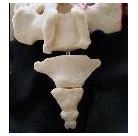
First of all, if we look at this model of the pelvis, here we can see that when somebody sits, they are putting a lot of their body weight onto the sit bones at the bottom of each buttock on the right and left sides.
And not quite as much weight goes onto the tailbone at the midline.
Partly this is because the entire pelvis is elevated somewhat by the gluteal, or buttock, muscles and tissue, including fat within the area.
So people are not sitting quite as directly onto the seat.
But then when someone loses body weight, including losing weight in the gluteal or buttock region, the tailbone becomes that much closer to the chair they are sitting on.
They may never have had tailbone pain before, or it may have only been very very mild or uncommon, infrequent.
But now, all of a sudden, they are having tailbone pain.
Often what is happening can be seen if we look at another model here.
We can see that the tailbone is at the lower end of the spine.
We can see normally there is a small amount of clearance between the tailbone and the chair that you are sitting on, so we are not putting much of our body weight directly onto that area.
But as the pelvis shifts or sinks a little bit lower because someone has lost some of the gluteal body weight, then the lower tip of the tailbone starts to contact the chair, making direct contact in a way that it had not been making before.
So if there is a bone spur there, for example, (which is one of the common sources that I see in patients who travel to see me for tailbone pain after weight loss)… often there may be a bone spur there that can be the cause.
There are special X-rays and MRI studies that can be done in a very particular way to properly image this.
A standard MRI often will fail to show it.
A standard CT scan often will fail to show it.
Even standard X-rays, if they are not done properly with a coned-down collimated view, will fail to show it.
There are particular tests that can be ordered in the proper way, and also carefully on the physical exam, to evaluate for this and other findings that can cause tailbone pain after weight loss.
If you are interested in more information about tailbone pain, then certainly on Amazon you can always grab a copy of my book, Tailbone Pain Relief Now.
If you are interested in coming to see me in person, or find more information and free videos, etc., you can find me online at www.TailboneDoctor.com
Okay, that’s all for now about tailbone pain after weight loss.
Here is the video:
Here is the YouTube video Link: https://youtu.be/Sty1ydNHMso
Here is the screen shot for this video:
To get your copy of the book “Tailbone Pain Relief Now!” go to: www.TailboneBook.com or go to Amazon.
For more information on coccyx pain, or to be evaluated at Dr. Foye’s Tailbone Pain Center in the United States, go to: www.TailboneDoctor.com

His personable, private-practice office is located on a modern, renowned, academic medical school campus, at Rutgers New Jersey Medical School.
For an appointment, call 973-972-2802.
https://tailbonedoctor.com/
- Istanbul International Coccyx Pain Symposium July 2026 - April 1, 2026
- Pelvic P.T. podcast’s Tailbone Pain episode interviewed Patrick Foye, M.D., all about Coccyx Pain - March 31, 2026
- Weight Loss Causing Tailbone Pain. Coccyx Pain After Losing Weight: Ozempic, Mounjaro, Wegovy, GLP-1 - March 16, 2026