What did an early 1900’s Medical Book Say About Coccyx Pain, Tailbone Pain?
At an Irish restaurant in New Jersey, I noticed that the bookcase behind me had a bunch of medical books.
So, I looked through them and found a few pages specifically on the topic of coccyx pain (tailbone pain, coccydynia, coccygodynia).
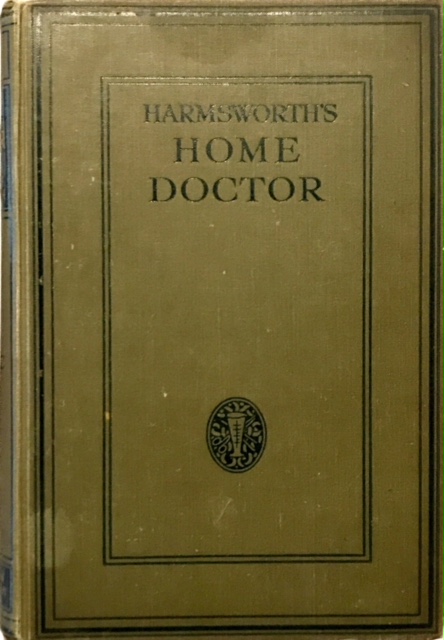
The book had the name of the person who owned it 1960. It did not list the date printed, so I am guessing it was from the 1950’s, but it may be even older because when I got home and looked it up it seems that these “Harmsworth Home Doctor” medical book series were popular in the 1920’s. Printed in London.
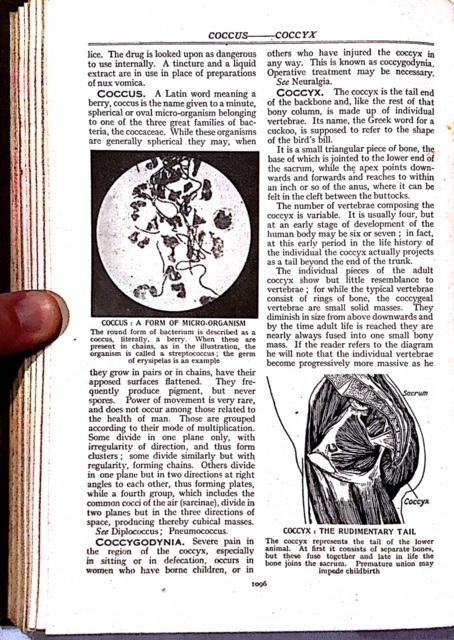
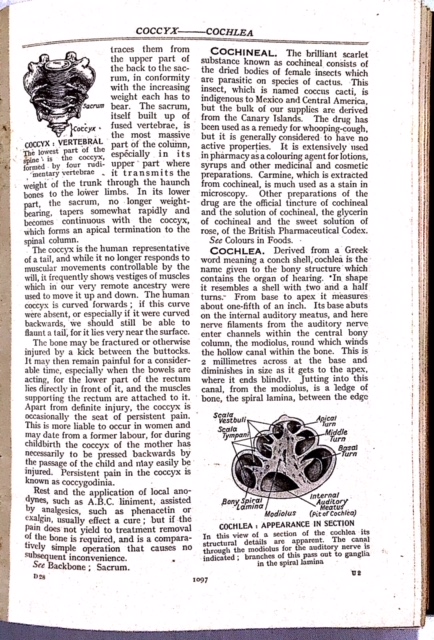
I think it oversimplifies treatment of tailbone pain. One sentence says, “If the pain does not yield to treatment, removal of the bone is required and it is a comparatively simple operation that causes no subsequent inconvenience.”
Below is a video I made about this, along with photos showing the coccyx pages of that book.
Here is the video:
Here are the photos of the pages that discuss the coccyx, including tailbone anatomy and tailbone pain.
Book Cover from early 1900’s, Harmsworth Home Doctor
Title page for this volume of Harmsworth Home Doctor, from ~early 1900’s.
Coccyx Pain, 1950s, Page 1, Tailbone Pain
Coccyx Pain, 1950s, Page 2, Tailbone Pain
Here is the text from the video:
Transcription not yet available…
The book mentions ABC Liniment
I wondered… what ointments and liniments were applied to the skin ~70 years ago?
The book did specify “A.B.C. Liniment”.
So I looked it up.
ABC Liniment: Compound liniment of aconite, consisting of equal parts of the liniments of;
Aconite (a poisonous plant also known as ‘devil’s helmet’),
Belladonna (also known as ‘deadly nightshade’), and
Chloroform (which used to be used as an inhaled anesthetic, but now is mainly used to manufacture refrigerant freon).
Not something that we would use in the current century!
Yesterday, I really enjoyed teaching medical students about my field: Physical Medicine and Rehabilitation (PM&R).
Throughout the year I teach medical students where I work, at Rutgers New Jersey Medical School.
But this once-a-year “Medical Student Fair” brings in medical students from many different medical schools from around the country.
The students learn about PM&R and they rotate through stations to learn about different areas of practice within the specialty. My station was the fluoroscopy suite, where they learned about evaluating and treating patients in pain, including the use of fluoroscopically-guided spinal injections for back pain, coccyx pain (tailbone pain), etc.
It is great to teach these students, since they will be our next generation of physicians. They were a terrific bunch.
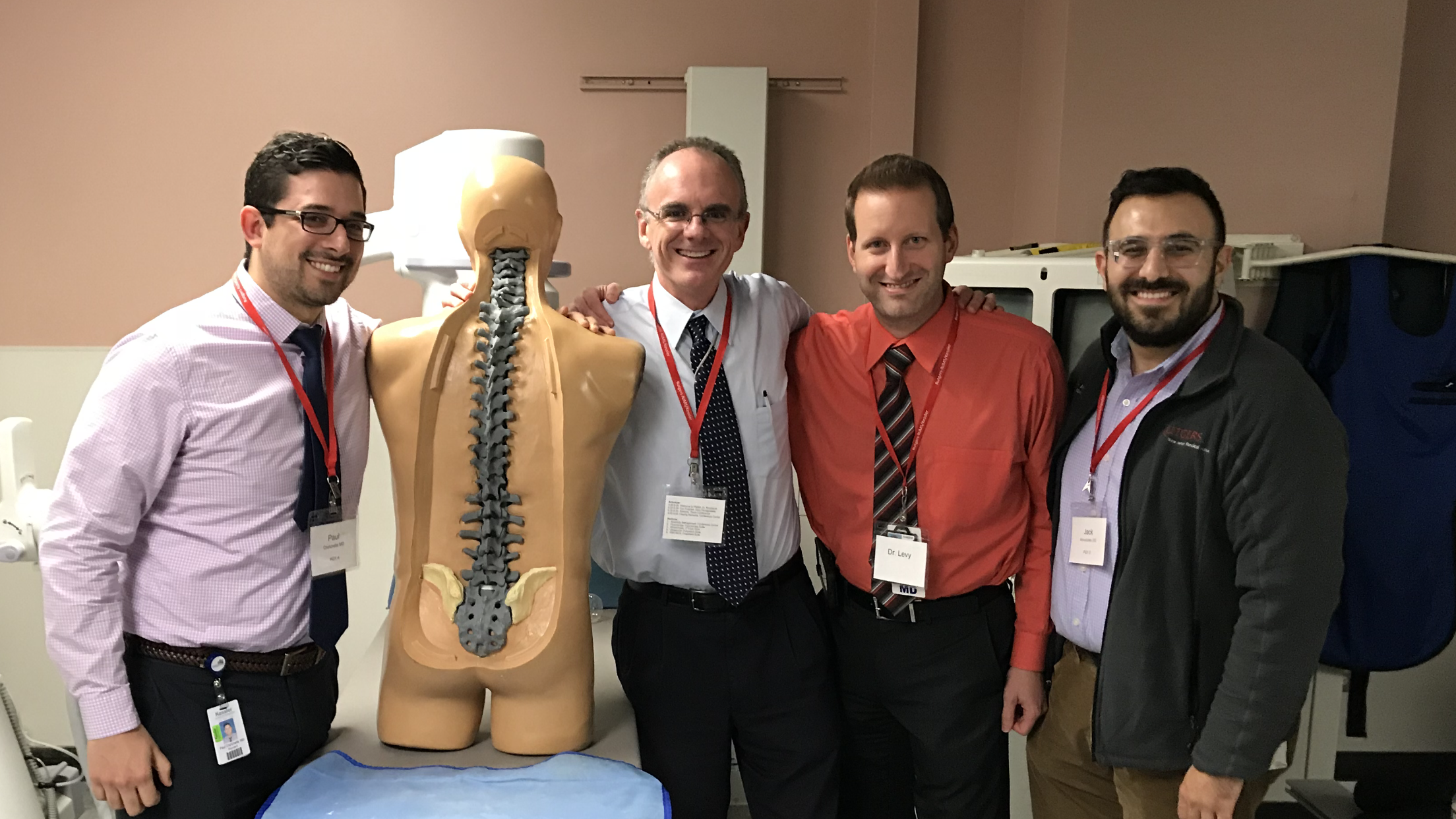
Patrick Foye MD (center) teaches about PM&R, Spinal Injections, and Fluoroscopy
Patrick Foye MD teaches Medical Students about PM&R and Fluoroscopy
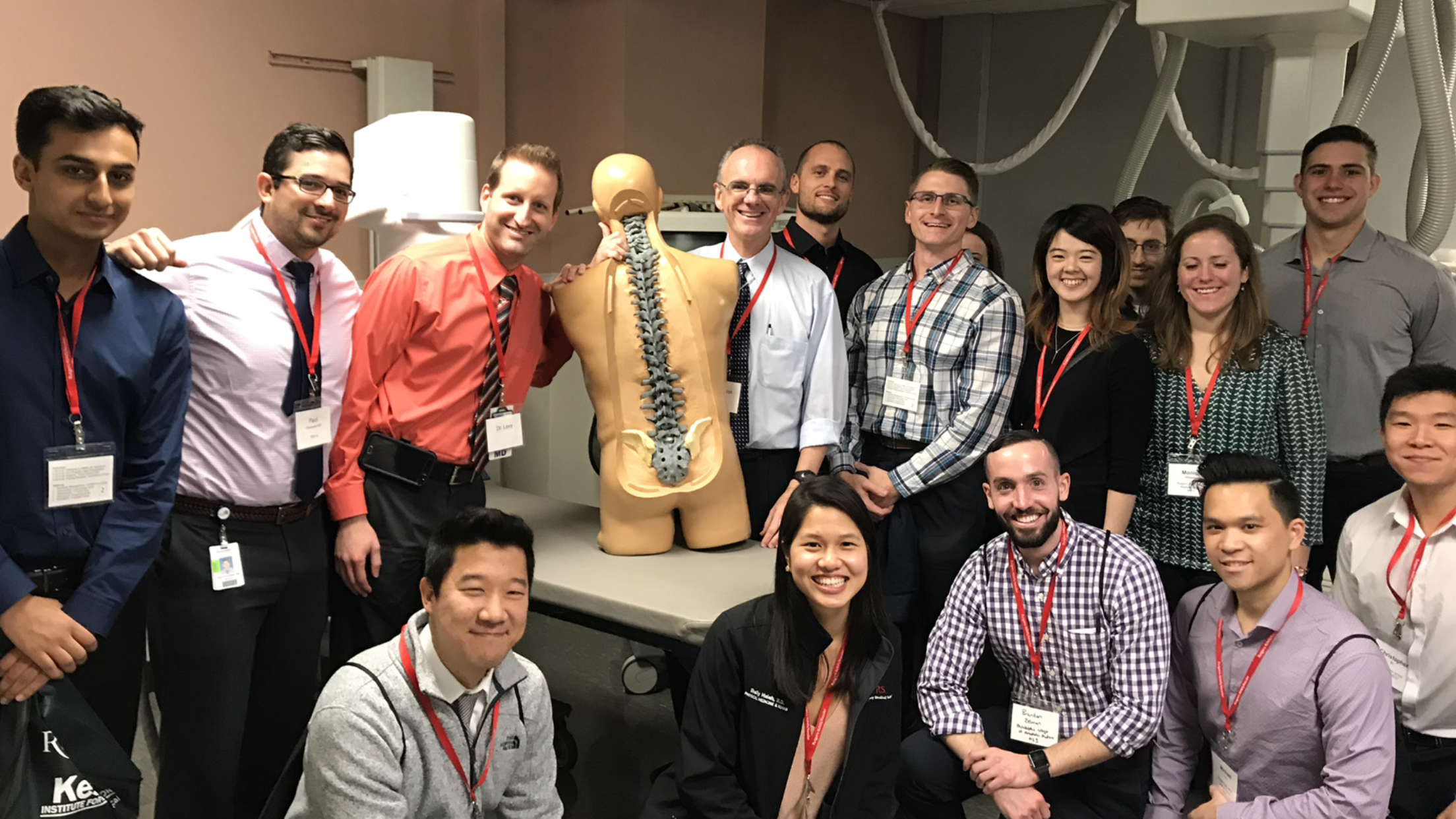
Group Photo, Medical Students learn about PM&R. Awesome group!
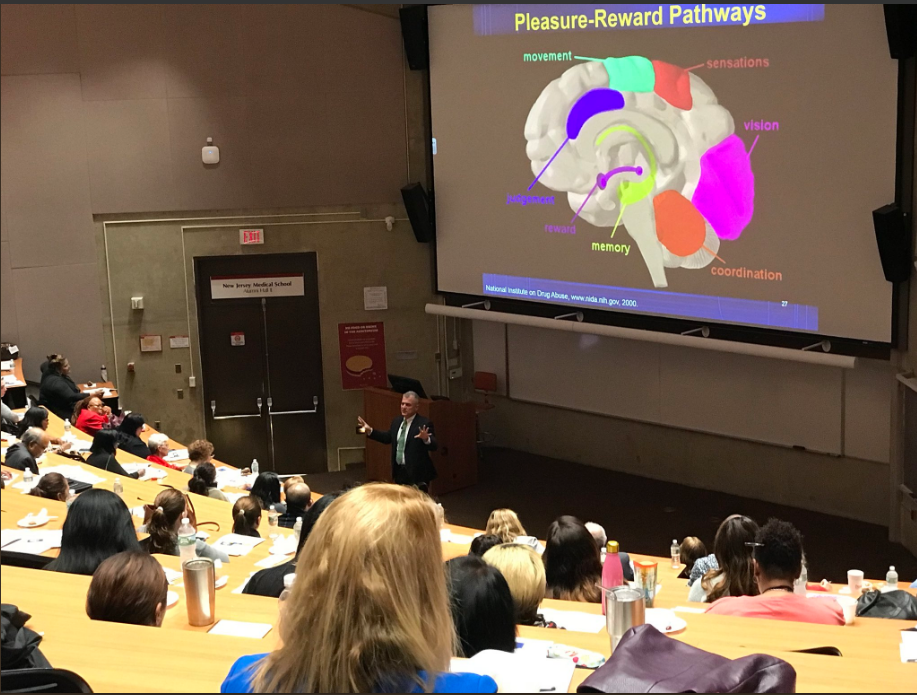
Dr. Foye recently attended the Pain Medicine Symposium 2017, which is a medical conference for pain management physicians.
The conference was run by the New York Society of Interventional Pain Physicians (NYSIPP) and the New Jersey Society of Interventional Pain Physicians (NJSIPP).
There were physician experts speaking and attending from around the world. Modern treatments were covered, including regenerative medicine (Platelet Rich Plasma [PRP] injections, stem cell injections, etc.), neuromodulation procedures, nerve ablation, injections and other procedures done under fluoroscopic guidance, injections and other procedures done under ultrasound guidance, etc.
It was a terrific conference and a great chance to network and reconnect with other physicians who also specialize within the field of pain management.
Conference, NJSIPP, NYSIPP, New York Society of Interventional Pain Physicians and New Jersey Society of Interventional Pain Physicians, 2017
Patrick Foye MD at NYSIPP NJSIPP New Jersey Society of Interventional Pain Physicians, NYC skyline
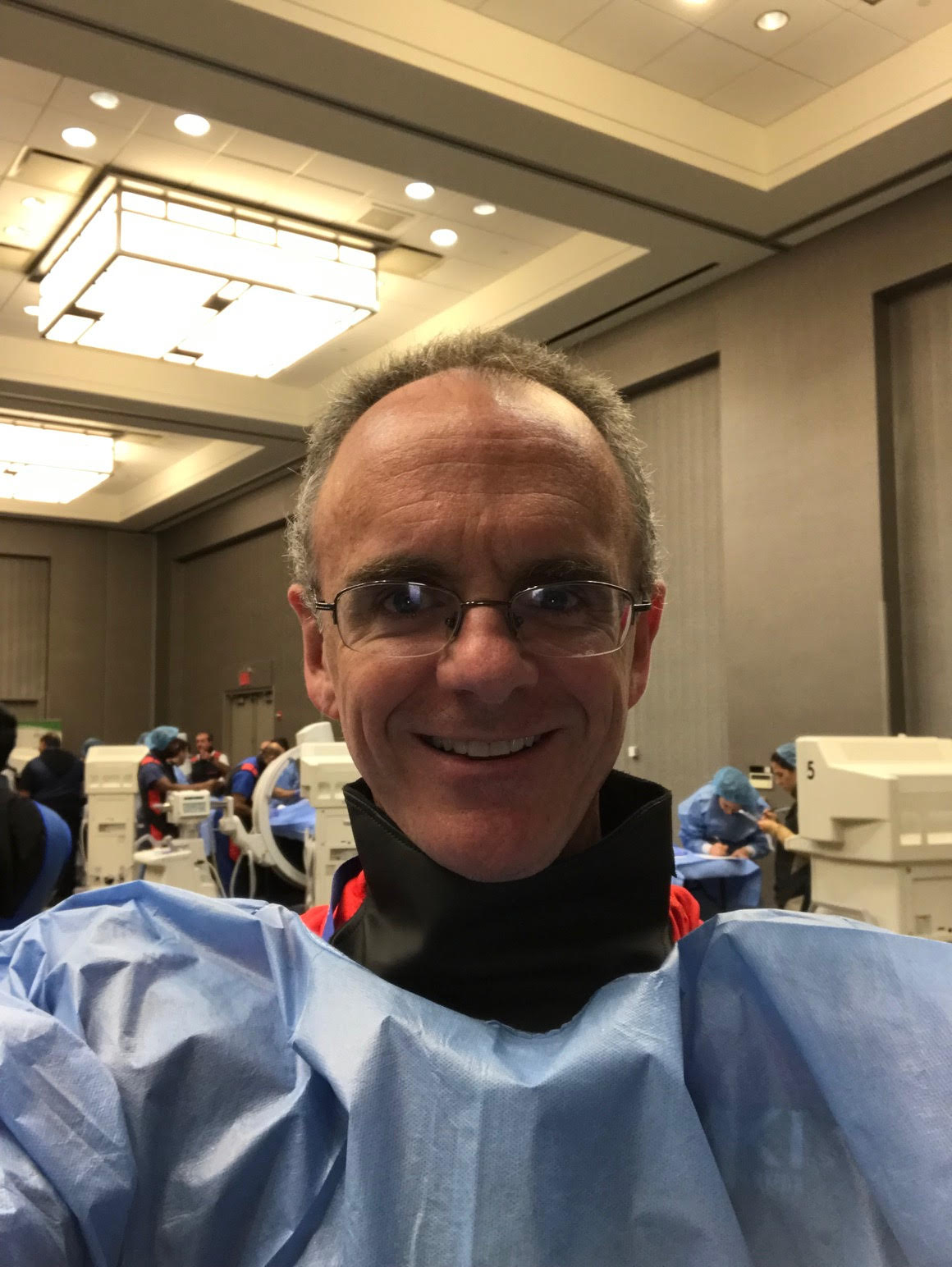
Patrick Foye MD, Fluoroscopy Lab at NYSIPP NJSIPP New Jersey Society of Interventional Pain Physicians, Conference 2017
Patients sometimes ask me whether the “spinal cord” is located at their coccyx.
It’s a reasonable question, since the spinal cord does extend through most of the human spine.
What is the Spinal Cord?
The spinal cord is a dense, relatively tightly packed collection of nerves.
The spinal cord is almost like a big, thick electrical cable, with lots of electrical wires (nerves) going through it.
But it’s more complicated because there is also a complex system of connections that work like relay switches (synapses), where electrical signals get turned on and off.
Where is the Spinal Cord and the Spinal Canal?
In general, the “spinal cord” itself goes from the base of the brain down to the upper lumbar region.
Usually the lowest part of the spinal cord is at about the level of the 1st or 2nd lumbar vertebral bone, which, for reference, would be a few inches ABOVE your belt line or waistband.
So, the spinal cord is relatively far away from the tailbone in the vast majority of patients.
(A small percentage of patients may have a spinal cord that is “tethered” down, sometimes seen in people with spina bifida, for example, but even then it would not be so far down that it would be expected to be down at the level of the coccyx).
However, the spinal CANAL extends downward through the sacrum.
The coccyx does NOT have a spinal cord within it, and the coccyx does NOT have a spinal canal within it.
The “Meninges” are “Lining” for the Spinal Canal
The walls on the inside of the spinal canal are mostly made of spinal bones.
But there is a lining inside the bones. It’s sort of like the way that there is a plastic lining inside of the walls of a swimming pool. This lining keeps the spinal fluid from leaking out.
The lining of the spinal canal is called the “Meninges” or meningeal lining or meningeal layers. It includes the dura mater, arachnoid mater, and pia mater .
The meningeal lining is almost like Saran wrap or whatever you call plastic wrap in your part of the world
Although the coccyx does not have any spinal canal within it (unlike the rest of the human spine)… BUT… some of the meningeal fibers that line the spinal canal do extend down through the sacrum and a few of those fibers attach at the top of the coccyx. This is probably not clinically significant in the vast majority of patients, but it rare cases patients may have tension or tugging or tightness of those fibers, where movements or tightness at other levels of the spine may cause tension/tugging on the coccyx, and vice versa. It’s uncommon, but possible.
OTHER Nerves at the Coccyx
Since there is no spinal cord at the coccyx, does that mean that there are no at the coccyx region???? …… No! Definitely not!
There are lots of other nerves at the coccyx.
Examples include normal somatic nerve fibers that carry pain and other sensation from the coccyx and surrounding tissues.
The skin over the coccyx is innervated by nerves.
Importantly, the ganglion Impar is located at the level of the upper coccyx.
In summary, the spinal cord itself is NOT located at the coccyx. But other nerves ARE located at the coccyx.
There are many reasons why doctors choose to specialize in a given area of medicine.
The video below was done by the American Academy of Physical Medicine and Rehabilitation (AAPM&R) regarding why doctors choose to specialize in Physical Medicine and Rehabilitation (PM&R). It features Patrick Foye, M.D., and other PM&R physicians.
The word “Doctor” comes from the Latin word docēre [dɔˈkeːrɛ] ‘to teach‘.
So, a Doctor is a Teacher.
Doctors teach patients about the health and about their medical conditions and treatment options. A patient who is well-informed about their condition can make better decisions about their healthcare.
There are many ways to teach people about their health.
The most traditional approach is for a physician to spend time with each individual patient, informing one patient at a time regarding his or her specific diagnosis.
But physicians also have some responsibility to society overall, beyond just the individual patients who come for in-person medical care.
Public and private physician groups regularly issue public statements regarding matters of public health.
Examples include medical professional groups such as pediatricians recommending childhood immunization programs, or a national cancer society recommending certain protocols for cancer screening programs.
Modern methods of communication such as the Internet allow physicians to provide information online for free use by the public.
This can include blogging, YouTube videos, social media posts on Facebook, Twitter, etc.
Physicians are increasingly using the Internet to provide helpful information to society at large, providing benefit even to those who may never meet the physician in person.
In general, when people find medical information online, they should discuss this with their in-person treating physician, who can advise the person as to whether the information is correct and whether it is relevant to this individual person.
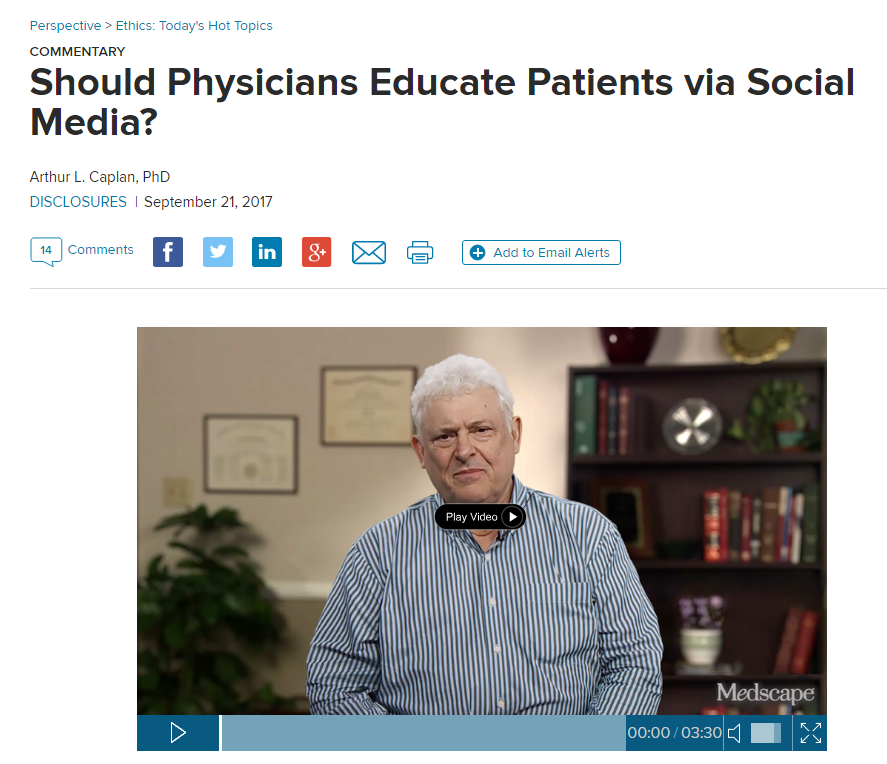
In the Link below, there is a video encouraging physicians to provide medical information online via Social Media.
The video is from Medscape.com, which is a well-regarded medical information site.
The speaker is Dr. Arthur L. Caplan, PhD. He is a Professor of Bioethics, in the Department of Population Health, at NYU (New York University) School of Medicine.
Source: Medscape, which is described as follows: “Medscape is the leading online global destination for physicians and healthcare professionals worldwide, offering the latest medical news and expert perspectives”